Our Sarasota location has moved! Visit us at 202 North Rhodes Avenue, Unit 104, Sarasota, FL 34237.
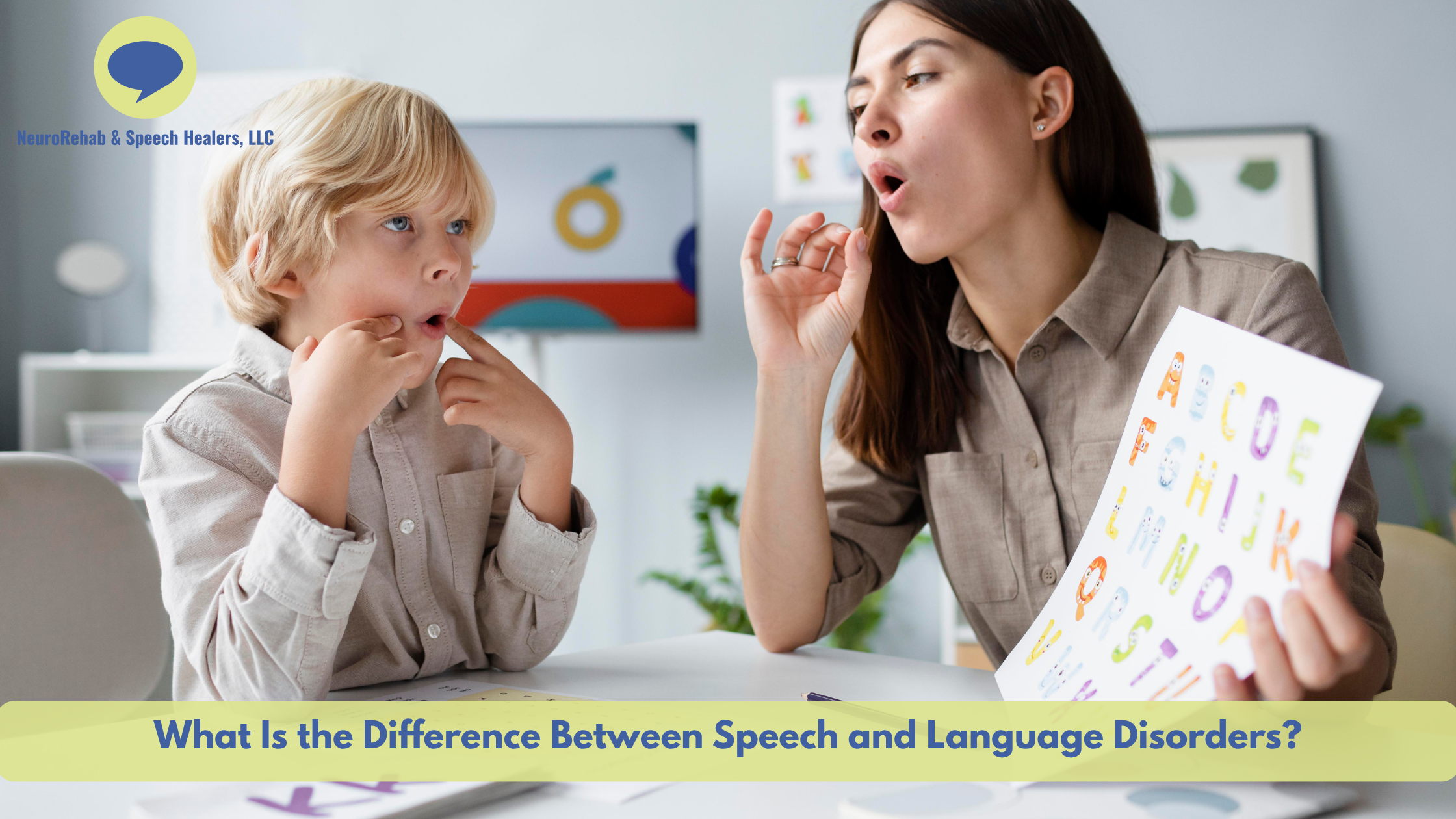
Speech and language are often thought to mean the same thing, but they are actually two different parts of communication. A child may speak clearly but still struggle to understand instructions, or they may understand everything but have difficulty pronouncing words correctly.
Because these challenges can look similar in everyday life, it is easy to get confused between a speech delay and a language delay.
Explore the difference between speech and language disorders in a simple way, along with signs, causes, and when to consult a speech therapist.
A speech disorder refers to difficulty in producing sounds clearly or speaking fluently. It affects how words are spoken, not how language is understood.
In simple terms, the child usually knows what they want to say, but the words may not come out clearly or smoothly.
Speech disorders may include:
For example, a child may say “wabbit” instead of “rabbit,” struggle with sounds like “r” or “s,” or repeat parts of words while speaking. The message is clear in their mind, but speech clarity is affected.
Language disorders affect meaning, understanding, and expression. They involve difficulty in understanding others and using words to communicate thoughts effectively.
A child may produce sounds normally but still struggle with communication.
Common signs include:
For example, a child may not follow instructions like “bring your bag,” or may speak in short, incomplete sentences. Here, the issue is not pronunciation but how language is understood and used.
Understanding the difference between speech and language disorders becomes easier when you compare them side by side:
Speech Disorder:
Language Disorder:
Speech is about sounds. Language is about meaning.
Yes, it is very common for individuals to experience both speech and language difficulties at the same time. For example, a child may struggle to pronounce certain sounds clearly and also have difficulty forming proper sentences.
This is why a proper evaluation is important. A speech-language pathologist can assess whether the issue is related to speech, language, or both, and design a targeted therapy plan accordingly.
Speech and language disorders can develop due to different reasons, including:
In many cases, there is no single cause, and multiple factors may contribute to communication difficulties.
Recognizing early signs can help in getting timely support.
If these signs persist over time, it may indicate a need for professional evaluation.
You should consider consulting a speech therapist if:
Early intervention improves outcomes significantly. The earlier a speech or language issue is identified, the easier it is to support improvement and build stronger communication skills.
Speech therapy provides structured, personalized support based on individual needs. A therapist first evaluates the specific difficulty and then designs targeted exercises.
Therapy may help with:
With consistent support, both children and adults can make meaningful progress over time.
Speech and language disorders are often confused, but they refer to different aspects of communication. Speech deals with how words are spoken, while language deals with how meaning is understood and expressed.
Recognizing this difference early helps in getting the right support. With timely intervention, communication skills can improve significantly, helping individuals express themselves more clearly and confidently.
Speech and language difficulties can feel confusing, but identifying the difference early can make a significant impact on progress. At NeuroRehab & Speech Healers, we provide detailed evaluation and personalized therapy to address both speech clarity and language development with a focused, supportive approach.
Contact us today and take the first step toward clearer, more confident communication.
A speech disorder affects how words are spoken, while a language disorder affects how words and sentences are understood or used.
Yes, many individuals experience both conditions together.
Unclear speech, limited vocabulary, difficulty forming sentences, and trouble following instructions are common signs.
Causes may include developmental delays, hearing issues, neurological conditions, or brain injuries.
If communication delays or difficulties persist beyond expected developmental stages, a speech therapist should be consulted.