Our Sarasota location has moved! Visit us at 202 North Rhodes Avenue, Unit 104, Sarasota, FL 34237.

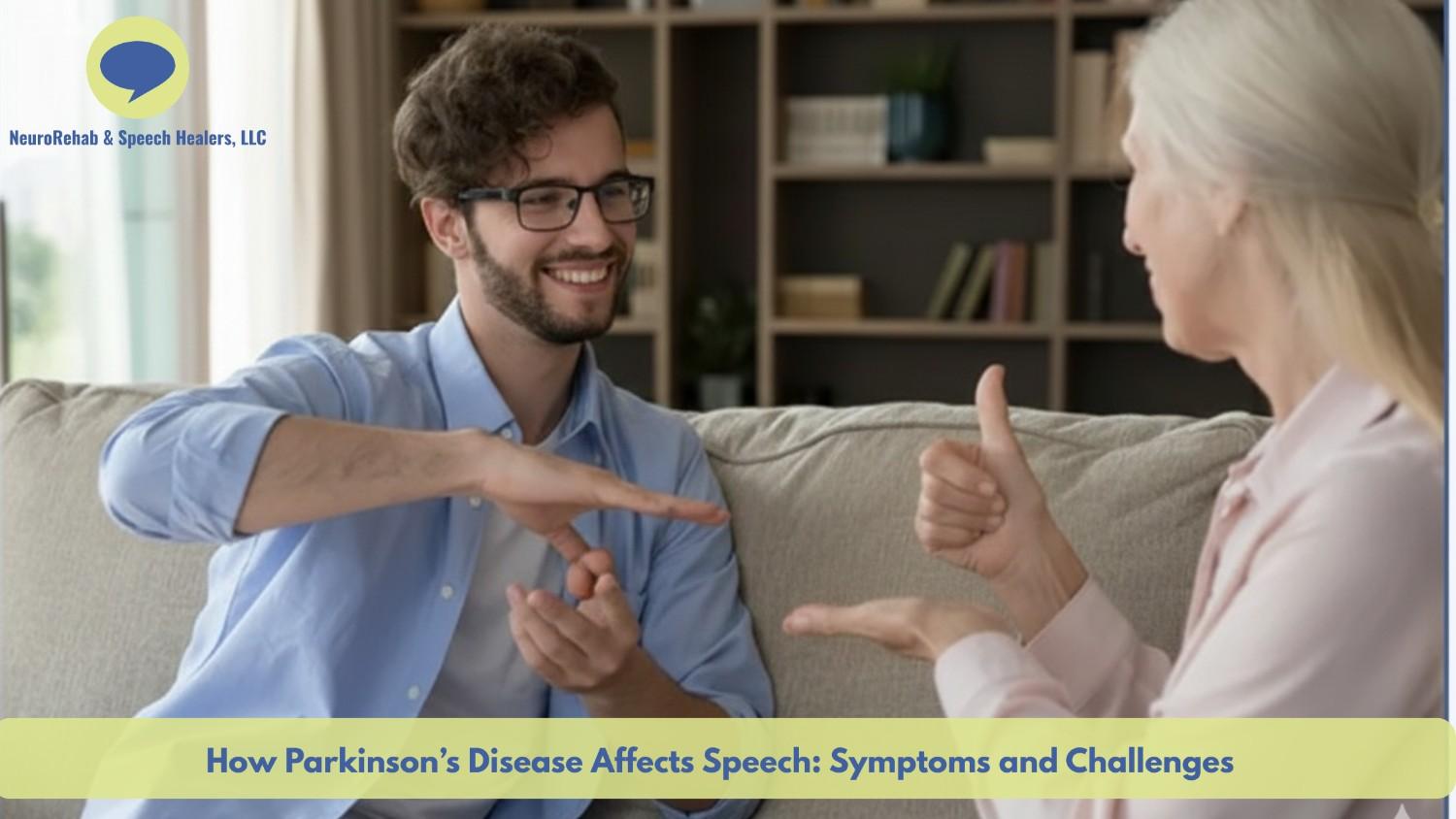
Parkinson’s Disease (PD) is a progressive neurodegenerative disorder primarily recognized for its motor symptoms, such as tremors, bradykinesia, and postural instability. However, communication deficits are among the most prevalent and impactful secondary symptoms of the disease, affecting nearly 90% of individuals over the course of their diagnosis.
While speech changes often begin subtly, they can significantly impair a person's quality of life and social integration. Recognizing these symptoms early and understanding the physiological mechanisms behind them is essential for effective intervention.
To address speech changes in Parkinson's, one must first understand the role of dopamine. The depletion of dopamine-producing neurons in the substantia nigra disrupts the basal ganglia's ability to regulate the force and amplitude of movement.
In the context of speech, this results in "hypokinesia," small, restricted movements of the muscles responsible for respiration, phonation, and articulation. Essentially, the brain's internal perception of effort becomes skewed. A patient may feel they are speaking at a high volume, while the physical output remains significantly below the threshold for clear communication.
The clinical presentation of Parkinson’s speech is often categorized under the umbrella of hypokinetic dysarthria. Key symptoms include:
The most frequent symptom is a marked reduction in vocal volume. This is caused by a combination of poor breath support and the inability of the vocal folds to close with sufficient force.
Just as a patient’s handwriting may become smaller (micrographia), their articulatory movements, the way the tongue and lips reach for sounds, become restricted. This results in speech that sounds muffled or slurred.
The ability to vary pitch and rhythm is often lost. This lack of inflection can make a speaker sound devoid of emotion, leading to a disconnect between the speaker’s intent and the listener’s perception.
While some patients experience a slower rate of speech, others exhibit rapid, "staccato" bursts of words. This is often described as a "festinating" speech pattern, where the speaker's words seem to run away from them.
A breathy or hoarse voice quality is common. This is often the result of "vocal fold bowing," where the vocal cords do not meet in the center, allowing air to escape and reducing the clarity of the tone.
The impact of these symptoms extends beyond the clinical. Communication is the primary vehicle for social connection, and its breakdown often leads to:
Evidence-based Parkinson’s speech therapy is the most effective way to manage these changes. Speech-Language Pathologists (SLPs) employ specific protocols designed to overcome the sensory-motor deficits inherent in the disease.
While clinical therapy is the foundation of treatment, several environmental and behavioral adjustments can assist in daily life:
If speech becomes softer, less clear, more tiring, or harder to control, it’s important to seek help early. Starting Parkinson’s speech therapy sooner rather than later can slow progression, improve confidence, and preserve communication skills over time.
Speech changes are a significant, yet manageable, aspect of Parkinson’s Disease. Early referral to a Speech-Language Pathologist is vital, as intervention is most effective when started before speech becomes significantly impaired. Through a combination of professional therapy and diligent home practice, individuals with Parkinson’s can maintain their voice and their connections to those around them.
When speech becomes softer or harder to control, don’t let communication slip away. At NeuroRehab & Speech Healers, our expert-led Parkinson’s speech therapy focuses on clarity and confidence, is personalized to your needs, and is guided by experienced speech-language specialists. Contact us today to get started!